
Adi Kailash Yatra Complete Guide (2026)
Adi Kailash, also known as Chhota Kailash, is one of the most sacred Himalayan pilgrimage destinations dedicated to Lord Shiva. Located in the Pithoragarh district of Uttarakhand, India, near the Indo-Tibet border, Adi Kailash offers devotees a divine spiritual experience amidst breathtaking mountain landscapes. This complete guide covers everything you need to know before planning your Adi Kailash Yatra — route details, permits, best time to visit, difficulty level, itinerary, and travel tips.
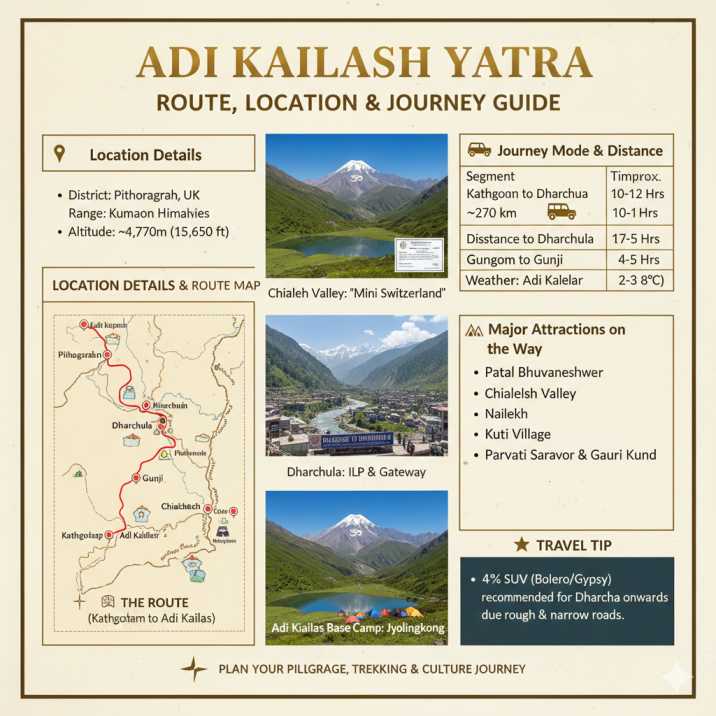
Route, Location & Journey
Adi Kailash is situated in the Vyas Valley of Uttarakhand, close to Om Parvat and the Lipulekh Pass. The journey usually begins from Kathgodam or Haldwani and continues through Dharchula, Gunji, and Kuti village before reaching the Adi Kailash base area. The region is surrounded by snow-capped Himalayan peaks, sacred rivers, and peaceful valleys, making it a spiritually uplifting and scenic journey.
Best Time to Visit
The best time to visit Adi Kailash is between May and October, when
the weather remains relatively stable and road conditions are
suitable for travelers and pilgrims. During these months, the
Himalayan region offers clear skies, pleasant daytime temperatures,
and better visibility of the sacred mountain peaks.
May and June are ideal for those who prefer comfortable weather
before the monsoon season begins. From July to August, travel may
occasionally be affected due to rainfall and potential landslides,
so proper planning is important. September and early October are
again considered excellent months because the monsoon clears the
atmosphere, offering breathtaking mountain views and a peaceful
spiritual environment.
Winters (November to April) are extremely cold, and heavy snowfall
can block routes, making travel difficult or restricted. Therefore,
pilgrims are advised to plan their Adi Kailash Yatra during the
recommended months for a safe, smooth, and spiritually fulfilling
journey.